

The first time I speak with my clients, I often begin with a simple question. Something like, “How do you see your birth unfolding?” or “What are you hoping this experience feels like for you?”
And this is where the conversation naturally begins to shift toward a question many expectant parents ask – should I have a birth plan, or should I just go with the flow?

Birth is unpredictable.
You fall pregnant, and suddenly you are stepping into an entirely new world, the birth world. A world filled with language, choices, and possible pathways that most people have never been exposed to before. And wont be exposed to until they are in the thick of it, literally. Birth is unpredictable and when its your first time, its almost completely unknown. Because of that uncertainty, it’s easy to fall back on the idea that there’s no point planning anyway. That you can’t control what happens, so the simplest approach is to just go with the flow.
Why could this mindset be a problem?
There’s nothing inherently wrong with going with the flow – but it can be problematic when it becomes a default way of thinking. When that happens, it’s easy to unintentionally hand over your autonomy to other people and move through what can become a complex experience without understanding what’s happening, what choices are available to you, and where your voice fits into the process.
Even when the people caring for you genuinely have your best interests at heart, they are still not you.
They aren’t the ones in your body, feeling what you’re feeling, carrying your values, your intuition, your fears, or your hopes for this experience. They are working within their training, their responsibilities, and the systems they are part of.
And while healthcare providers play an incredibly important role, sometimes even a life-saving one, nobody will ever be as connected to your birth experience, or as affected by its outcomes, as you are.

So where do birth plans come in?
Creating a birth plan is less about a ridged script. Its not a step by step process to be followed or a set rules your birth team should follow. A birth plan is a tool, used to encourage you to be informed and empowered as you move into and through your birth experience.
I actually prefer to think of it as a birth map.
A map doesn’t control the journey, nor does it predict every turn. What it does is help you understand the landscape ahead. It shows you the roads you might encounter, the possible detours, the obstacles that could arise, and the different routes available to reach your destination.
You know where you’re starting, you know where you’d like to end up, and you have a better understanding of what may influence the journey in between.
Birth preparation works in much the same way.
You don’t want to walk into birth completely unaware of what may lie ahead. You want to understand the different pathways that could emerge, what options may be offered to you along the way, and how certain decisions may influence what happens next.
But can’t I just learn that when I’m in labour?
You can. But labour isn’t the ideal time to be learning important information for the first time.
When you take the time to create a birth map, you’re not simply writing down preferences. You’re becoming familiar with the birth process itself.
You begin to understand how your body works in labour, how your environment can influence the way labour unfolds, and how your support team can either help or hinder that process. You learn about the role hormones play in labour and birth, and how feelings of safety, privacy, confidence, and support can affect them. You also become familiar with the options that may be presented to you, including pain relief, monitoring, and interventions, along with the potential benefits, risks, and considerations of each.
Just as importantly, you become familiar with the language of birth. The terminology, the conversations, and the decisions being discussed around you become less intimidating because you’ve already encountered them before.
That familiarity matters.
Because when something is completely unknown, it can feel overwhelming. When it’s familiar, even if it’s challenging, it often feels far more manageable.
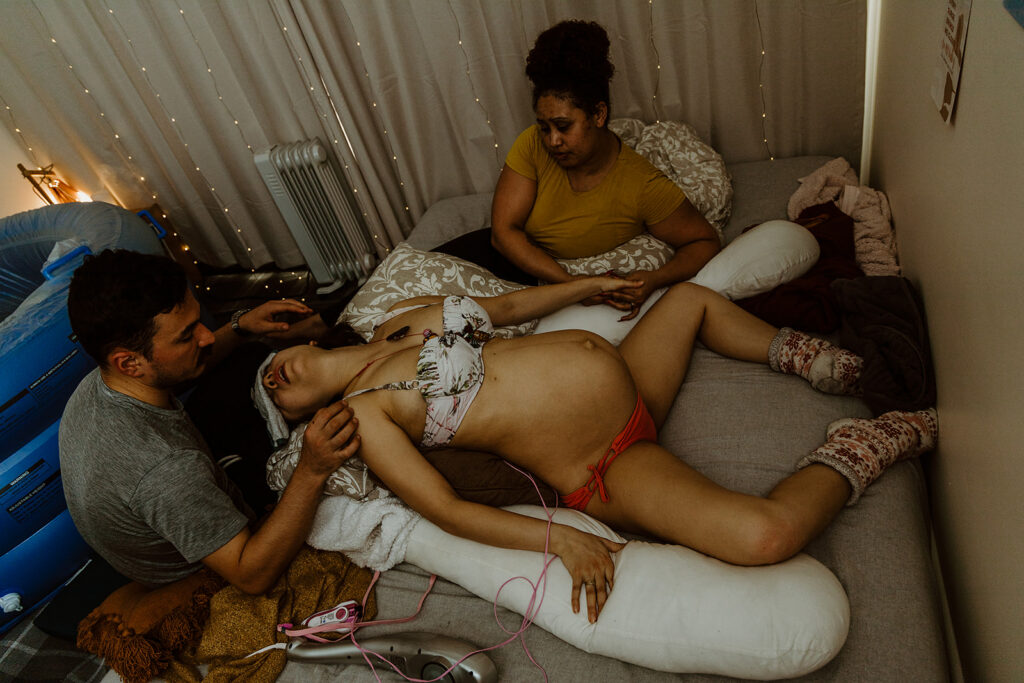
Making a birth plan (or map) means you are empowered.
Earlier I said birth is unpredictable, and that’s still true. A birth map doesn’t make birth predictable. What it does is make the landscape more familiar. Things that once felt completely foreign become things you’ve already explored, considered, and discussed. You’ve had time to think about what matters to you and how you may feel about certain choices before you’re in the middle of labour. That puts you in a very different position when decisions need to be made. Instead of relying entirely on someone else to interpret the situation for you, you’re able to actively participate in the decision-making process.
You become part of the conversation, not simply someone decisions are being made for.

And this can support labour itself.
Labour is driven by hormones that thrive when you feel safe, supported, private, and undisturbed. When you’re trying to process brand new information, weigh up unfamiliar options, and make complex decisions in real time, it can pull you into a more analytical, thinking state disrupting birth, resulting in more information and decision. Can you see how this might cascade?
Preparing beforehand reduces some of that mental load. Instead of trying to work everything out during contractions, you’re recognising information you’ve already explored and decisions you’ve already considered. So now you can stay focused on the work of labour itself, while your partner can remain focused on supporting you rather than scrambling to understand unfamiliar information.
So, am I saying you need to become an expert in birth before giving birth?
Absolutely not.
This isn’t about completing an eight-year medical degree in nine months. It’s all about familiarity. It’s about understanding enough to feel grounded in the experience you’re stepping into. Because going into something with no understanding at all can be frightening. It’s like being dropped on a highway without knowing the road rules. You’re not feeling confident in your next move; you’re simply reacting.
The benefit is not only seen when you become an expert. But you do deserve to understand the landscape you’re stepping into. Because when you understand your options, your rights, and the choices that may be offered to you, you’re no longer simply going with the flow and rely on others to do what is best for you.
You’re actively participating in your birth experience. And that can make all the difference.
A birth plan isn’t about controlling birth. It’s about making sure birth doesn’t happen to you.
If creating a birth map feels overwhelming, that’s exactly where I can help.
As a doula, my role isn’t to tell you what choices to make. It’s to help you understand your options, prepare for the realities of labour and birth, and feel confident making decisions that align with what’s important to you.
Together we’ll explore how birth works, what pathways may be available to you, and how to approach your experience feeling informed rather than uncertain.
My birth preparation and support packages start from $350.
If you’d like support creating your own birth map and preparing for birth with confidence, I’d love to hear from you.